BitSummit is at a crossroads. It’s even right there in the event’s name this year, BitSummit X-Roads.

Kyoto’s annual independent game show celebrated its 10th anniversary on Aug. 6 and 7, bringing together developers, guest speakers and gaming fans to put the vibrancy of Japan’s indie scene on display once again.

Now, the organizers behind the convention are at a turning point: They can either double down on the success of the past 10 years or incorporate new challenges into an event that has become bigger than even its founders envisioned.

A hint to the path they might take is in the butterfly wings that adorn the main mascot for this year’s show.

“The butterfly wings represent the chrysalis transforming to become the butterfly,” says BitSummit co-founder James Mielke. “The question I asked during my opening speech was, ‘Are we just going to do the same thing year in and year out, or are we going to evolve and change?’ The difference between BitSummit and other gaming events, in my opinion, is that other gaming events, you just attend the event. But with BitSummit, everyone who is involved in BitSummit is a part of BitSummit. That's a huge distinction for me.

"As you (exhibitors and attendees) change and transform, so will we. I think that's important, to keep it fresh and to always try and have new ideas. We'll see how that manifests."

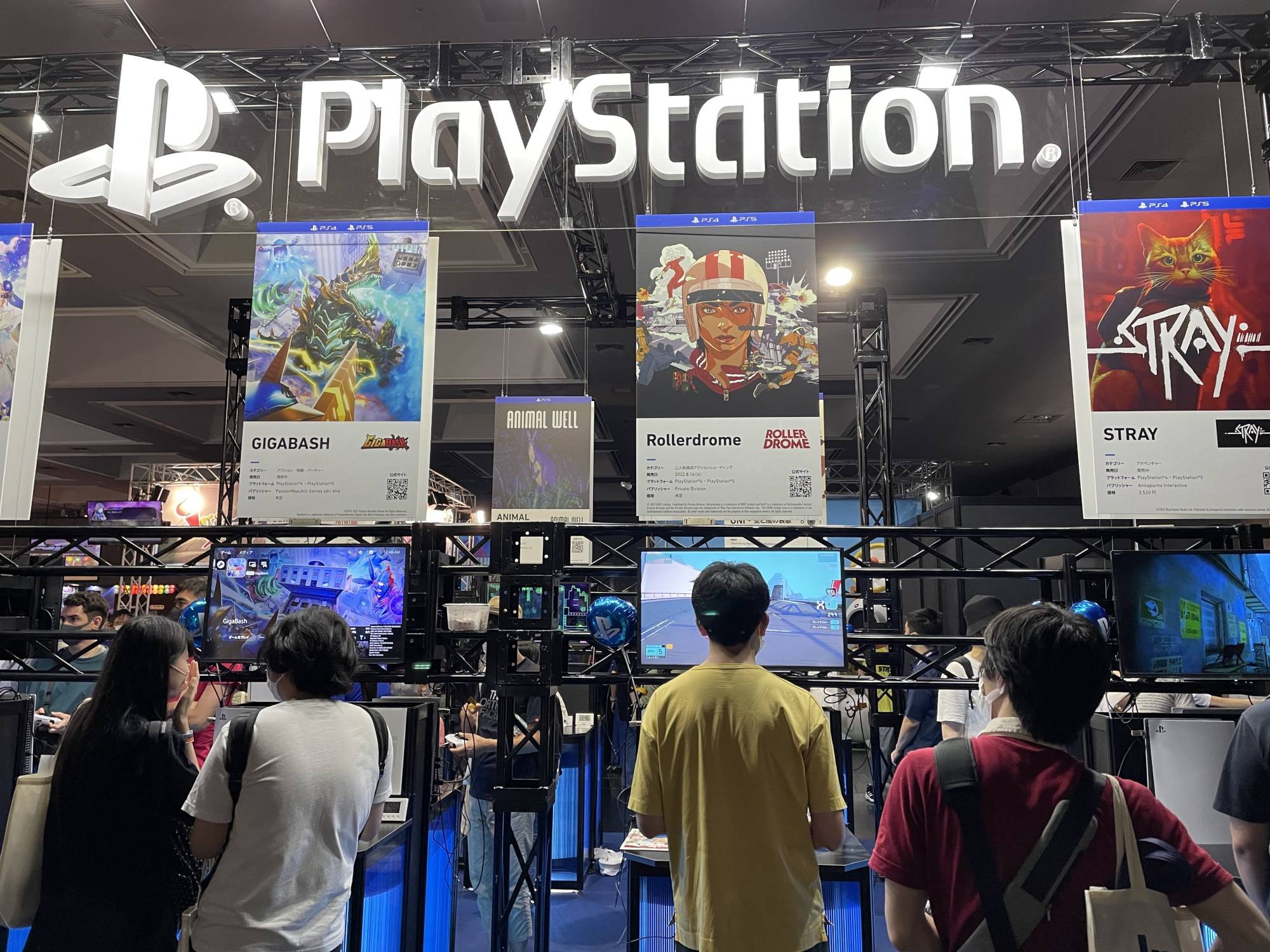
BitSummit X-Roads took over the third floor of Kyoto’s Miyako Messe exhibition hall, filling the vast expanse with something for everyone. NeverAwake, a shooter by Neotro Inc., was named the top game of the show, and there were creative offerings such as roguelike Ninja or Die, party game Dragon Drop and cardboard mystery Paper Cut Mansion.

Shuhei Yoshida, former president of Sony Interactive Entertainment's Worldwide Studios was among the convention’s guest speakers, and composer Yuzo Koshiro performed songs from the game Sol Cresta.

BitSummit was open to the public again after an online-only event due to COVID-19 in 2020 and a scaled-down, industry-only edition in 2021, and fans flooded the show floor on Aug. 7.

This was a far cry from BitSummit’s humble beginnings. Mielke had the idea for the show while working at Kyoto-based Q-Games and took it to Dylan Cuthbert, Q-Games’ founder.

“He said, ‘All right, go for it, if you can figure out the plan, let’s do it,’” Mielke recalls. “And then we did it.”

The first BitSummit, in 2013, was billed as an indie developer and media summit. The attendance number was 170.

"The first one was in basically a high school gym," says John Davis, a BitSummit organizer. "It was very much let's just get together and talk. Then we all walked around and played each other's games."

The second show, which drew 5,350 attendees, was huge by comparison, and the event kept becoming more robust in new ways with each edition. Now, even Nintendo, which famously shuns the Tokyo Game Show (TGS), has a dedicated presence at BitSummit.

BitSummit is not as expansive as shows like TGS or Electronic Entertainment Expo (E3), but Davis feels that is part of its appeal.

"From everyone I talked to about it, what they like about the show is that it's not like TGS, or G-Star or PAX or E3," he says. "You have indie devs that are just getting started, and then you have platform-holders like Nintendo, Sony, Microsoft, Valve, etc., that are here, and you have everyone in the middle of this well.

"It's very easy to meet and talk to people. Someone said to me it's one of the few places where the small fish can talk to the big fish without having to jump through a bunch of hoops."

The goal at the outset was to illuminate the Japanese indie scene and give developers the tools to reach even wider audiences, and by most estimations, BitSummit reached that objective. Now Mielke is pondering what comes next.

"It's very different now than it was 10 years ago," Mielke says. "Ten years ago, we just wanted to let the world know that there were Japanese indies because so many Western indies were really getting a lot of attention — and deservedly so.

"The beautiful story here is that we've led the horse to water, and it's learned how to drink. So that's great. So that's what I'm talking about when I say, ‘How do we evolve at this point?’ Because we've achieved that goal of getting that level of understanding out there to all the developers in Japan, all the indie developers. So now, how can we better serve the Japanese developer? And we're still figuring that out."

That remains a big part of the vision, as Mielke beams every time a developer credits the show with giving them a push.

“That means we've impacted people in a super positive way to be able to make games for a living,” he says. “Which is presumably their dream — to be financially independent enough to just make games.”