The Japan Times Online
 
Home > News
print button email button
| Share

Sunday, Oct. 16, 2011

Recycling bras kills two birds with one stone

Kyodo

Major underwear makers are collecting used bras to recycle into a solid fuel for industrial use, a move aimed at raising their profile as environmentally conscious companies, as well as offering women the opportunity to use their old undergarments for a worthy cause.

News photo
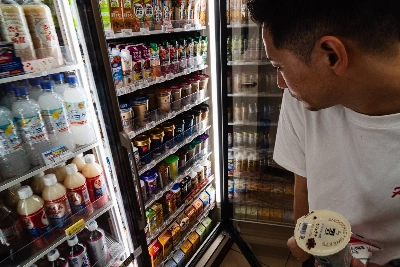
Bring your bras: A sales assistant explains a recycling system for bras to a customer at a lingerie shop in Tokyo in April. KYODO PHOTO

Triumph International Japan Ltd., a Tokyo-based underwear manufacturer, provided free plastic bags in April and May at some of its stores nationwide. Customers were encouraged to rummage through their wardrobes for old or unneeded bras and use the bags to take them to stores. Triumph also accepted bras of other brands.

"I won't have to worry about what to do with my old bras any longer if manufacturers take them back," a 33-year-old housewife said at a Triumph store in Chuo Ward, Tokyo.

She said she used to cut her bras into pieces before throwing them out with the trash.

Many Japanese women find it embarrassing and uneasy to throw out their underwear along with other waste, as many cities and towns have regulations requiring residents to put garbage in transparent plastic bags.

Many women are also concerned about their underwear being stolen by perverts.

"While considering what we can do for environmental conservation, we came up with an idea that can also ease the anxiety among our customers," a Triumph spokesman said.

Many women have apparently felt such anxiety for years. A 2004 survey by major lingerie maker Wacoal Corp. found that 61 percent of respondents hesitated to throw out bras with the trash.

In a bid to respond to such customer concerns and also as part of its environmental protection drive, Tokyo-based Wacoal introduced a recycling program in 2008.

Metals are removed from the bras and the remaining parts are made into a type of fuel for boilers and power generation facilities.

The domestic industry calls it "refuse paper and plastic fuel (RPF)," made of waste paper and plastic, including fibers.

Triumph has collected more than 200,000 bras since it began recycling activities in 2009 and turned them into 14 tons of RPF fuel. Wacoal, meanwhile, said it has collected more than 179,200 bras and produced 17.9 tons of the fuel.

This year, Wacoal broadened its campaign to include some of its stores in Taiwan.

Bras are typically made of a blend of fabrics and wires built into the underside of the cups. Because of their construction, manufacturers say it has been difficult to separate bras into their component parts.

Producing RPF out of bras is the only way of recycling them that has been discovered to date, according to the Japan RPF Association.

Compared with refuse-derived fuel made from household garbage, RPF, which is made from separated refuse, contains less impurities and water, the association said. It also emits very little dioxin when incinerated.

Moreover, it has a combustion efficiency comparable with coal and coke but generates less carbon dioxide. The association said RPF costs one-third or one-fourth as much as coal and demand for it as an alternative to fossil fuels is expanding.

In a similar move, sporting goods makers are putting more efforts into recycling underwear. Rovex Inc., an online sporting goods seller based in Nara Prefecture, is among them.

Rovex is offering a ¥500 coupon for each piece of used underwear, and the company said it has collected about 300 undergarments for recycling so far.

Outdoor apparel maker Patagonia Inc. is collecting polyester and cotton T-shirts of its own brand. It then commissions textile makers such as Teijin Fibers Inc. to recycle the materials collected into new fiber to weave new clothing.

The company said it collected roughly 39 tons of underwear and other clothing for recycling between 2005 and 2010.

But industry experts say creating fibers from used materials requires special expertise and is generally expensive. Not much progress has been made in the field of fiber recycling, they say.

"There is room for technological improvement in separating materials and removing impurities, while businesses are urged to develop products using more recyclable materials," said Teruo Kimura, a professor at Kyoto Institute of Technology who specializes in recycling engineering.


print button email button
| Share

We welcome your opinions. Click to send a message to the editor.

The Japan Times

Article 7 of 10 in National news

Previous Next


Back to Top

About us |  Work for us |  Contact us |  Privacy policy |  Link policy |  Registration FAQ
Advertise in japantimes.co.jp.
This site has been optimized for modern browsers. Please make sure that Javascript is enabled in your browser's preferences.
The Japan Times Ltd. All rights reserved.